
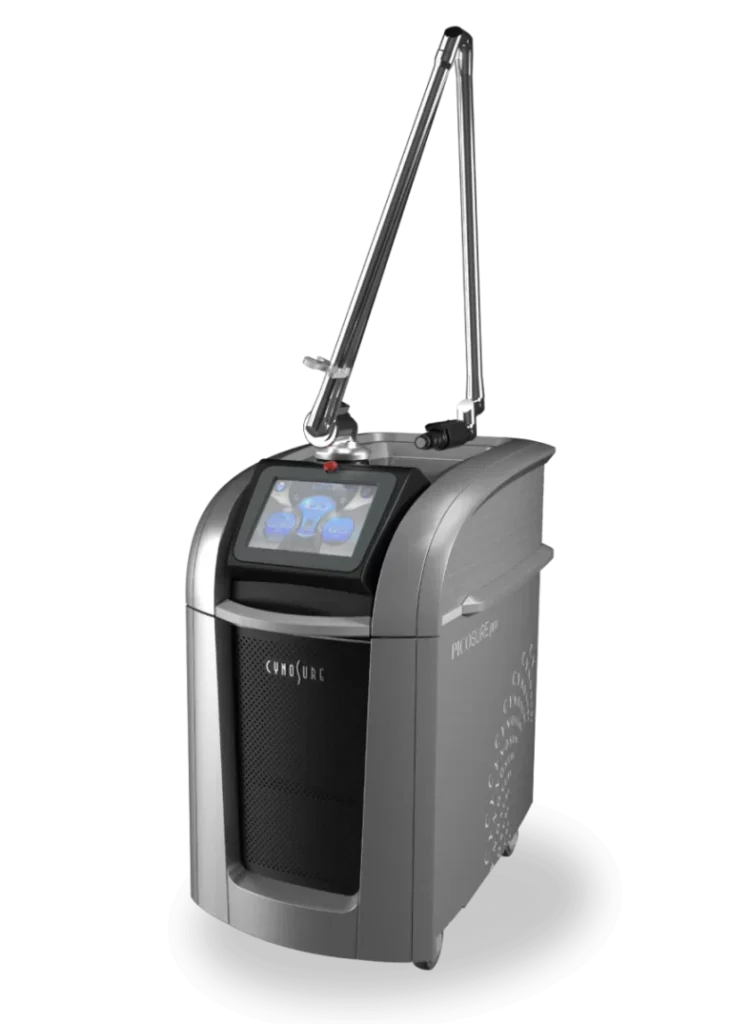
PicoSure Pro laser treatment uses extremely brief bursts of laser energy to address selected pigmentation, acne-scar and skin-rejuvenation concerns. Because wavelength, handpiece, settings and diagnosis all matter, treatment at London Finsbury Clinic begins with an individual skin assessment rather than a standard protocol.
What is a PicoSure Pro laser?
A PicoSure Pro laser delivers energy in very short pulses. The rapid delivery can fragment selected pigment and, with an appropriate treatment mode, create controlled effects that support skin renewal and collagen remodelling. The aim is precise treatment while minimising unnecessary heat exposure.
What can PicoSure Pro laser treatment address?
- Selected sun spots and benign pigmentation
- Uneven tone and visible photodamage
- Some forms of melasma, after careful diagnosis
- Selected acne scars and textural irregularity
- General skin-rejuvenation goals
Not every brown mark should be treated with a laser. Any changing, unusual or suspicious lesion requires appropriate medical diagnosis before cosmetic treatment is considered.
PicoSure Pro laser for pigmentation
Freckles, solar lentigines, post-inflammatory pigmentation and melasma behave differently. Correct diagnosis guides the wavelength, settings, number of sessions and aftercare. Melasma is particularly complex and may worsen with heat, irritation or unsuitable treatment, so laser may form only one part of a wider plan.
PicoSure Pro laser for acne scars
Selected treatment modes may improve the appearance of some atrophic acne scars and uneven texture by supporting a controlled healing response. Deep ice-pick, rolling or tethered scars often require other techniques or combination treatment. Active acne should also be managed as part of the plan.
Can it be used on darker skin tones?
Potentially, but skin tone and pigmentation tendency influence every stage of treatment. Conservative settings, suitable wavelength selection, preparation and aftercare are important because post-inflammatory hyperpigmentation can occur after any energy-based procedure.
What happens during treatment?
The skin is cleansed and protective eyewear is used. The clinician passes the laser handpiece across the planned area using settings selected for the concern and skin type. Sensation is often described as brief warmth or snapping, although comfort varies.
Recovery and aftercare
Temporary redness, warmth, swelling, pinpoint crusting or darkening of treated pigment can occur. Do not pick or scrub the skin. Use the recommended gentle skincare and daily broad-spectrum sunscreen, and follow instructions about when to restart active ingredients.
How many sessions are needed?
The number depends on the diagnosis, treatment mode and individual response. A discrete pigment concern may respond differently from melasma, acne scarring or full-face rejuvenation. A course and maintenance may be advised; results cannot be guaranteed.
Frequently asked questions
Does PicoSure Pro treatment mean no downtime?
No. Some protocols have limited recovery, but downtime depends on the indication, intensity and skin response.
Can it be combined with Juvelook or a peel?
Selected combination plans may be useful, but spacing must protect the skin barrier and reduce irritation or pigmentation risk.
Should I stop retinoids?
Tell your clinician about all skincare, medicines and recent procedures. You will receive personalised preparation instructions.
PicoSure Pro laser consultation in London
At London Finsbury Clinic, treatment is planned according to diagnosis, skin type and tolerance. We will explain realistic outcomes, potential risks and whether the PicoSure Pro laser is the right option for your concern.
A consultation is required to confirm diagnosis, suitability and an individual risk profile.