
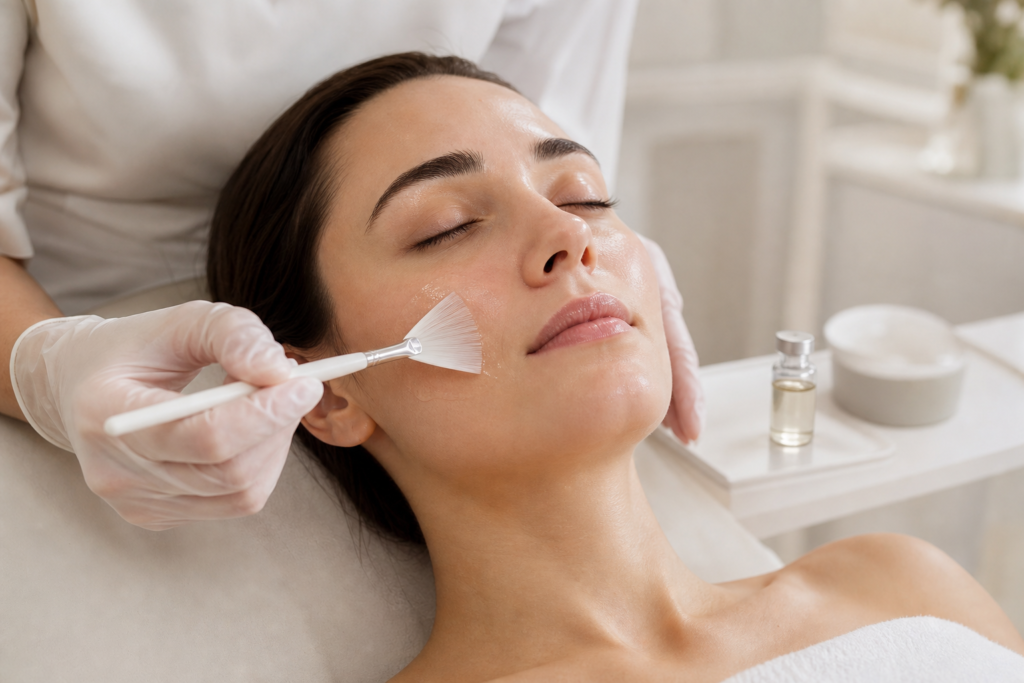
Juvelook and chemical peels work in different ways. Juvelook is used to support hydration and gradual collagen renewal, while a chemical peel targets the skin’s surface to improve selected concerns such as dullness, uneven tone and rough texture. For carefully chosen patients, combining them within a planned programme may address both deeper skin quality and surface appearance.
What does Juvelook do?
Juvelook combines PDLLA with hyaluronic acid. Depending on the treatment area and technique, it may support smoother-looking texture, hydration and progressive collagen stimulation. Improvement develops gradually rather than creating the immediate volume associated with conventional dermal filler.
What does a chemical peel do?
A chemical peel applies a controlled solution to the skin to encourage renewal at a selected depth. Peels vary significantly in strength and ingredients. A light peel may focus on radiance and texture, while other formulations are chosen for congestion or pigmentation. The correct peel is more important than simply choosing the strongest option.
Why might we combine them?
A combination plan can be useful when a patient has more than one treatment goal. Juvelook may support dermal quality over time, while the peel can address superficial tone and texture. The treatments may be performed at different appointments to protect the skin barrier and allow the response to each stage to be assessed.
How do we decide whether combination treatment is suitable?
Ethnic background alone does not determine a protocol. Our doctor considers:
- Fitzpatrick skin type and tendency to develop pigmentation
- Current sensitivity and strength of the skin barrier
- Active acne, inflammation or infection
- Previous reactions to peels or injectable treatments
- Season, sun exposure and upcoming travel or events
- The amount of downtime the patient can accept
Patients with a higher risk of post-inflammatory hyperpigmentation may need conservative peel selection, preparation products, longer spacing or a different treatment altogether.
Which treatment comes first?
There is no universal order. In some plans, the peel is used first to improve the surface and establish tolerance. In others, Juvelook is prioritised and the peel follows after recovery. Performing procedures too close together may increase irritation, so timing is a clinical decision.
What results can I expect?
The goal is progressive improvement in luminosity, texture and overall skin quality. Results vary with the concern being treated, peel type, Juvelook protocol, skincare and sun protection. A course may be recommended, and no combination can guarantee “glass skin” or permanent results.
Frequently asked questions
Can I have a peel immediately after Juvelook?
Not automatically. Your clinician will recommend a safe interval based on the treatments and your recovery.
Is this suitable for darker skin tones?
Potentially, but peel choice and preparation require particular care because pigmentation risk varies. An individual assessment is essential.
What should I avoid afterwards?
Follow your clinician’s advice, which commonly includes gentle skincare, daily high-factor sunscreen and temporary avoidance of heat, strenuous exercise and active ingredients.
This information is educational. Treatment selection requires consultation and may differ according to your skin and medical history.