HIFU describes the energy, MPT describes the platform
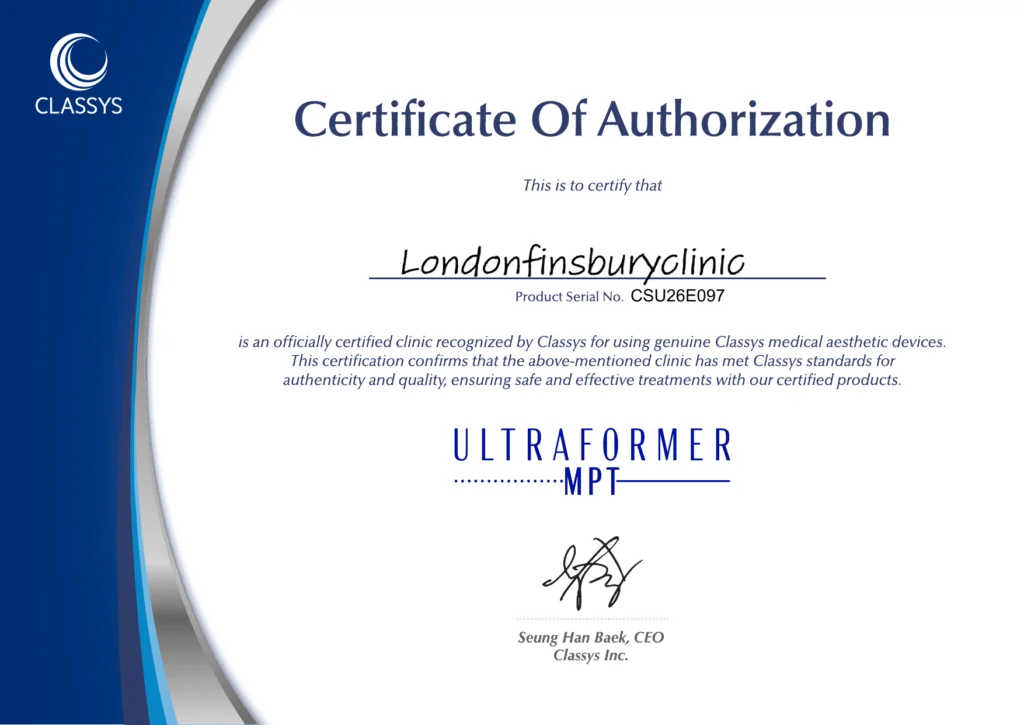
HIFU means high-intensity focused ultrasound. It concentrates acoustic energy into selected tissue, rather than delivering a laser beam or injecting a product. Ultraformer MPT (HIFU) is a named CLASSYS platform within this wider ultrasound category. The label HIFU alone does not identify the manufacturer, device generation, cartridge, treatment region or operator technique. Those details are worth asking about when comparing appointments.
From focused energy to gradual remodelling
At a suitable focal region, ultrasound creates a local thermal response. Changes in tissue proteins and the subsequent repair response can contribute to a firmer-looking result over time. An early change in appearance and later collagen-related remodelling are different stages. This is why we do not judge the complete result from a photograph taken straight after treatment, or automatically repeat lifting treatment before the response has developed.
Normal and MP: how delivery is organised
The CLASSYS clinical book illustrates both Normal and MP modes, sometimes within one treatment plan. Normal delivery is associated with discrete focal treatment points, while Micro-Pulsed delivery distributes energy in a different pattern. Mode selection is a clinical decision, alongside the handpiece, cartridge, settings and mapped coverage. A mode is not a separate injectable ingredient or a guarantee that a named number of shots will produce the same effect in every person.
Linear and circular delivery have different applications
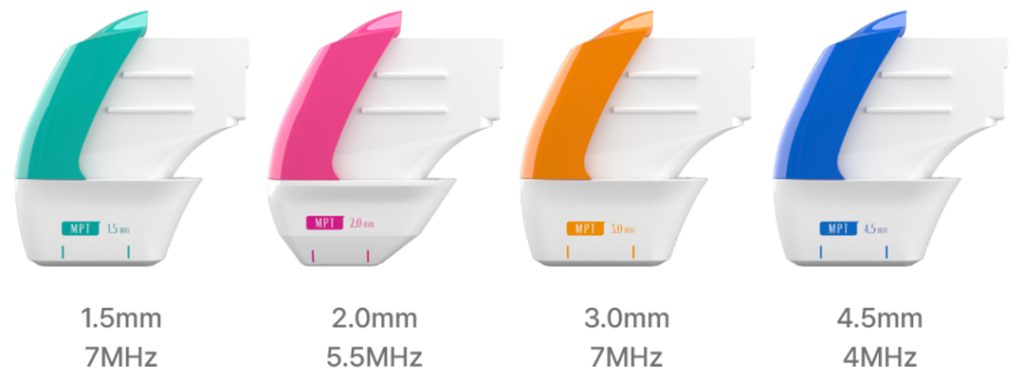
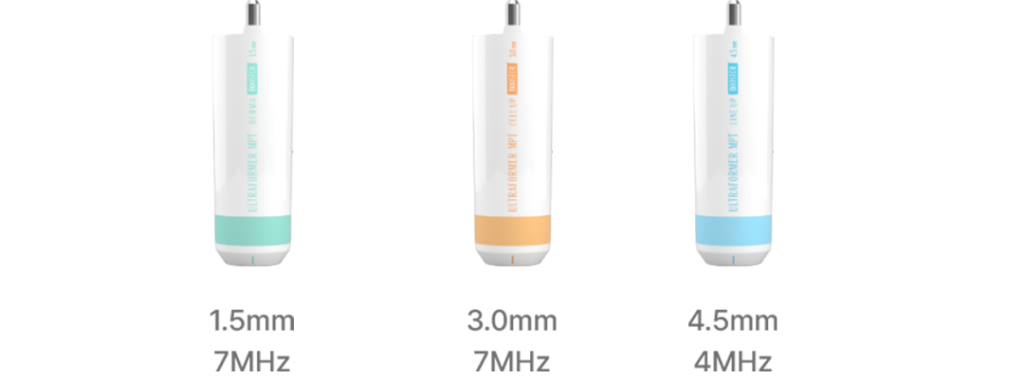
The conventional F-type cartridge follows a linear delivery arrangement. The Booster handpiece uses a circular arrangement and has its own treatment applications. The manufacturer illustrates Normal and MP choices across these systems, producing four delivery-pattern combinations. These should not be described as four unrelated energy sources. The case book shows different Booster protocols, including superficial skin-quality examples and deeper approaches; Booster does not automatically mean a superficial treatment.
Why a cartridge depth is not an anatomy map
Depth labels describe the nominal focal setting of a cartridge. They do not prove that the dermis, a fat compartment or a supporting layer lies at that exact depth in every area. Facial and neck tissues vary between people and within the same face. Your doctor considers tissue thickness, volume, support and neighbouring structures before selecting treatment. More depth, more heat or more shots is not automatically a better plan.
Skin, supporting tissue and the SMAS
The SMAS is part of the connective and muscular support system of the face, with relationships that change by region. It should not be treated as a single flat sheet located at one universal depth. Skin firmness, fibrous support and volume distribution can all influence the visible contour. We explain the intended tissue goal rather than promising that one cartridge will lift every face in the same way.
Why age and tissue quality change the plan
Chronological age is only one part of assessment. Skin elasticity, surface condition, natural volume, tissue support, weight changes and previous procedures can differ substantially between people of the same age. These findings help define whether the priority is surface skin quality, suitable laxity or contour. Your doctor relates the device settings to the tissue being treated and explains the expected scale of improvement. A superficial Booster plan and a deeper lifting plan therefore have different purposes even when delivered on the same platform.
From examination to an agreed shot plan
Planning starts with your goal and the treatment boundary. We assess regional tissue differences, select suitable cartridges and modes, and allocate coverage within the booked service. The main menu lists 1,000 shots for full-face lifting and up to 1,500 for face and neck; these are combined-area allowances, not a target for every small region. Shot records are useful alongside the treated area, depth and delivery pattern. At review, we compare the intended change using consistent photographs and allow the tissue response to develop before deciding on further care.
Lifting, skin quality and body contouring
A face-lifting plan, a superficial skin-quality appointment and a body-contouring treatment have different goals. Fat-targeting settings are inappropriate when preserving volume is the priority. The clinical book includes face, submental and body examples, but these do not establish that every depth should be used in every region. Our separate body page explains agreed body areas and current prices, while focused facial pages address the anatomy of each concern.
What the clinical photographs demonstrate
The manufacturer book includes two-dimensional photographs and three-dimensional volume or vector comparisons. Follow-up varies from immediate images to several weeks, and some cases involved repeated visits. Photographs are useful illustrations when the device, timing and treatment course remain visible. They do not provide a universal success rate or replace controlled clinical evidence. Our own treatment galleries identify any combined injectables separately.
The role of an ampoule or injectable combination
The CLASSYS Deep Synergy Booster is a separate ampoule component used with selected Booster services. It is not the ultrasound energy itself. An injectable such as Juvelook, Profhilo or another collagen-supporting product also has its own ingredients, purpose, preparation and timing. We explain which component is included, which is optional and how the proposed combination relates to your skin. Material-temperature information about an injectable is not, by itself, proof that heating guarantees a stronger result.
Plan, treat and review
Your consultation reviews health history, implants, previous aesthetic procedures, skin condition and the change you want. Treatment mapping, comfort checks and aftercare are included in the agreed service. Our usual face and neck lifting plan begins with one treatment and developing results are commonly reviewed around three months. Maintenance is considered according to the response and goals, often around twelve months. Booster services have separate single-session and optional course choices.